

Strong Future
Initiative
Community Solutions for Behavioral Health
Community Solutions for Behavioral Health

In November of 2018, Summit County voters passed Referred Measure 1A Strong Future with five separate funding components: wildfire prevention programs, mental health and suicide prevention services, recycling and waste diversion services, necessary repairs and improvements to extend the useful life and accessibility of public buildings and community facilities, and affordable early childhood care and learning for local families and workers.
Building Hope facilitates, organizes, and oversees the Strong Future Behavioral Health Citizens Advisory Committee, which ensures funding and services are focused on mental health across Summit County.

2027 Strong Future Behavioral Health Funding Application Now Open
Apply Here: http://summitcountyco.gov/
Applications will be reviewed by the Strong Future Behavioral Health Committee, with final funding determinations made by the Board of County Commissioners. Award notifications are anticipated in September 2026.
-
The behavioral health portion of 1A Strong Future can range between two and five million dollars annually for ten years.
- The Strong Future Mental Health Citizen Committee ensures funding and services are focused on the mental health continuum across Summit County.
- Roughly $200,000 of the earmarked funds will go directly to Building Hope to assist with the coordination and administration of a comprehensive mental health system in Summit County.
-
The remainder of the 1A Strong Future mental health funds will be distributed through a request for proposal process.
Do you care about Mental Health?
Do you want to make a difference in your community? We are seeking applicants for positions on the Strong Future Mental Health Citizens Committee.
Funding At Work
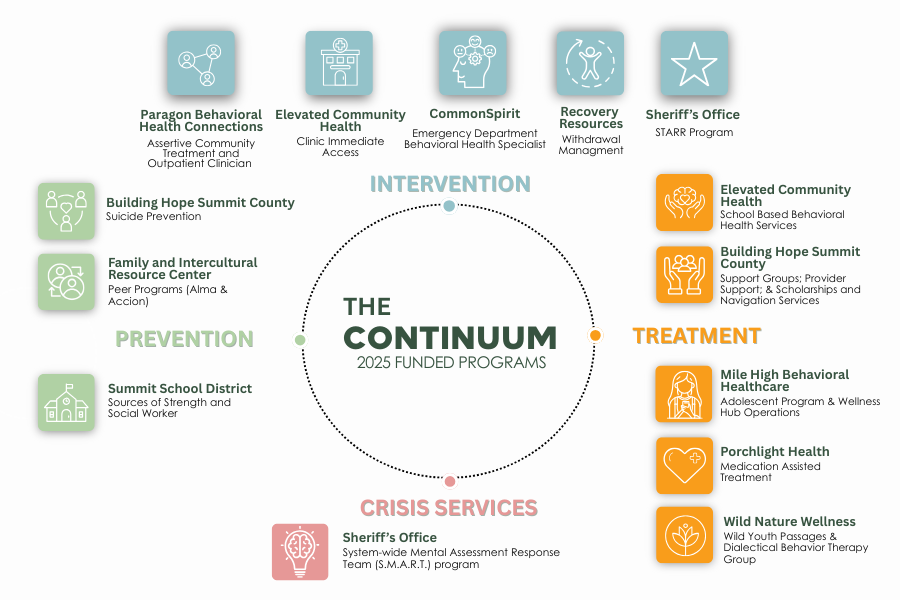
2025 Strong Future Funded Program Impacts
Building Hope Summit County

Improving Access and Capacity for Mental Health
It is reported that 4 in 10 adults in Summit County have expressed symptoms of anxiety and depression since March 2020, a significant jump from 1 in 10 adults reported in January 2019.
Building Hope Summit County is a community-wide initiative designed to create a more coordinated, effective and responsive mental health system that promotes emotional well-being, reduces stigma and improves access to care and support for everyone in Summit County.
- Residents served through free Community Connectedness Events
- Mental Health Navigation and Therapy Scholarship Programs
- Mental Health Training for community members and local workplaces
- Professional Development and other incentives to local therapists to increase capacity
- The HYPE youth programming
- Community Support Groups


Suicide Prevention
The Program
Awarded: $100,000
Spent: 100%
Community members affected by suicide risk, suicide loss, suicide attempts, trauma, or elevated behavioral health concerns.
The Data
Clients Served
2,166
Hours of Service
1,399
Cost Per Person
$47
The Why
Stigma Reduction
Prevention & Early Intervention
Data-Driven Action
Community Support Groups
The Program
Awarded: $20,000
Spent: 100%
Adults and community members living or working in Summit County experiencing stress, trauma, isolation, or identity-specific challenges, including parents, veterans, men and women.
The Data
Clients Served
703
Hours of Service
337
Cost Per Person
$28
The Why
Enhancing Social Connection
Addressing Service Gaps
Low-Barrier Access
Culturally Competent Care
Provider Support
The Program
Awarded: $192,080
Spent: 100%
Mental health providers and agencies in Summit County, prioritizing bilingual clinicians, early-career providers, and those expanding culturally responsive services.
The Data
Clients Served
158
Hours of Service
905
Cost Per Person
$1,216
The Why
Recruitment and Retention
Expanding Specialized Care
Sustainable Reimbursement Models
Culturally Responsive Workforce
Scholarships and Navigation Services
The Program
Awarded: $545,624
Spent: 73%
Residents facing financial, linguistic, cultural or insurance barriers to mental health care, prioritizing Spanish-speaking and uninsured/underinsured individuals.
The Data
Clients Served
779
Hours of Service
1,264
Cost Per Person
$513
The Why
Access & Affordability
Equity for Spanish-Speaking Residents
System Navigation
Recovery Resources


Summit County Clinical Withdrawal Management
Substance and alcohol abuse is prevalent in Summit County. Making the decision to live a sober life and enter recovery can be extremely difficult. Recovery Resources offers clinical withdrawal management services to Summit County, also known as Detox, offering compassion and support for individuals looking to end their substance use and overcome the struggles of physical and psychological withdrawal.
- 24 hours/7 days a week support for individuals looking to end their substance use.
- Provide a seamless transition to outpatient programs and residential treatment following withdrawal management.
3.2 Withdrawal Management
The Program
Awarded: $465,000
Spent: 56%
Individuals in substance use crisis, including those experiencing homelessness or barriers to treatment access.
The Data
Clients Served
96
Repeat Clients
18
Hours of Service
3,735
Cost Per Person
$2,707
The Why
Providing 24/7 Crisis Access
Closing Care Gaps
Addressing Social Determinants of Health
Summit County Sheriff’s Office

STARR: Strategies to Avoid Relapse and Recidivism
At the Summit County jail, inmates often show signs of substance abuse and poor behavioral health. While it is imperative to provide the proper punishment for inmates, it is also vital for the long-term sustainability of the community to offer treatment and opportunities for rehabilitation-proven to decrease the chance of another crime in the future. The Summit County Sheriff’s Office has established the Strategies to Avoid Relapse and Recidivism (STARR) program, which provides substance use and mental health treatment services within the facility.
- Focuses on behavioral health, utilizing a variety of treatments for trauma and other disorders.
- Testing is provided for overall behavioral health, suicide potential, and traumatic brain injury.
- Provides group and individual therapy sessions.
- Upon release, participants are provided a connection to free or low-cost community services, including re-entry coordinator services.


STARR Program
The Program
Awarded: $77,000
Spent: 100%
Adults incarcerated in the Summit County Detention Facility with mental health or substance use needs.
The Data
Clients Served
658
Repeat Clients
256
Hours of Service
3,840
Cost Per Person
$117
The Why
Reducing Recidivsm
Integrated Behavioral Health
Staff Resilience
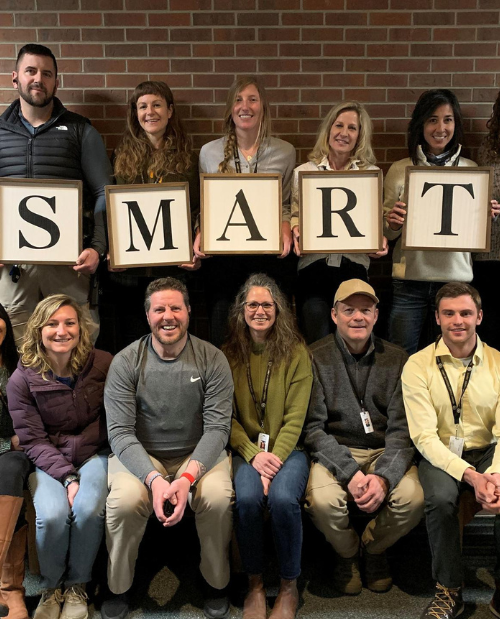
SMART: System-wide Mental Assessment Response Team
Nationwide interactions with law enforcement and citizens in mental health crises have prompted the demand for introducing mental-health training to our local law enforcement to prevent escalating situations in our community. SMART conducts full mental health assessments of community members in crisis, stabilizing them in-home and connecting them with appropriate follow-up care.
- De-escalate in place, allowing individuals to connect with their support system and stabilize vs. going to the emergency department, saving local first responder resources.
- Connects individuals with therapeutic support, coaching, and connection with local resources – ensuring safe re-entry after crisis events.
- Reduces criminal recidivism for participants and diverts appropriate cases from the criminal justice system.
SMART TEAM

Co-Response Program
The Program
Awarded: $848,344
Spent: 100%
Individuals experiencing mental health crises requiring immediate stabilization.
The Data
Active Crisis Calls
1,219
Case Management Calls
2,200
Hours of Service
2,256
Cost Per Service
$249
The Why
Co-Responder Model
Reducing ED Overcrowding
Public Safety Diversion
Elevated Community Health
(Formerly the Summit Community Care Clinic)
School Based Health Center (SBHC) Behavioral Health Services
Adolescents have increased levels of depression, stress, anxiety, and suicidal ideation than in years past. The School Based Health Center (SBHC) provides high quality, easily accessible behavioral health (BH) services to students in all Summit School District Schools – with the goal of helping them stay in school, stay in their home, and proactively work through a crisis with a trusted adult. Our goal is to provide the youth of Summit County with the resources they need to thrive emotionally and physically.
- Provides behavioral health assessments and crisis response.
- Programs include substance use education with topics such as vaping and tobacco use.
- Offers individual and group counseling.
- Connects students to outside providers and social services, including behavioral health providers.
- Successfully connects patients to Behavioral Health services. Creates seamless access to care, education, and resources. Improves health outcomes and provides high-quality and comprehensive support. This program also increases mental health literacy around behavioral healthcare.

School Based Behavioral Health Services
The Program
Awarded: $415,625
Spent: 100%
Students ages 5-18 across Summit School District requiring behavioral health support.
The Data
Clients Served
419
Hours of Service
8,615
Cost Per Person
$992
The Why
Reducing Barriers to Care
Linguistic Equity
Continuity of Care
In-Clinic Immediate Access
The Program
Awarded: $46,000
Funds Spent: 100%
Clinic patients presenting with urgent behavioral health needs, including uninsured and Medicaid-insured populations.
The Data
Clients Served
373
Hours of Service
3,189
Cost Per Person
$123
The Why
Integration of Care
Reduced Barriers to Access
Whole-Person Health
CommonSpirit St. Anthony Summit Hospital

CommonSpirit – Emergency Department Behavioral Health Specialist
Specialists are utilized to provide expert mental health support within the Emergency Department, offering timely assessments, consultations, and interventions for patients experiencing behavioral health crises. Their expertise helps improve patient outcomes, reduce length of stay, and optimize resource allocation within the Emergency Department.
- They provide rapid evaluations and recommendations for patients.
- They are trained to de-escalate situations and provide crisis intervention.
- They work closely with other Emergency Department personnel to ensure a coordinated approach to patient care.
- By providing specialized care within the Emergency Department, they help to reduce the time patients spend waiting for mental health consults.
- Their expertise in mental health can lead to better outcomes for patients.

Behavioral Health Specialist
The Program
Awarded: $15,000
Funds Spent: 100%
Patients presenting to the Emergency Department with behavioral health or substance use neeeds.
The Data
Clients Served
366
Hours of Service
404
Cost Per Person
$41
The Why
24/7 Crisis Access
Addressing Social Determinants
Linguistic Equity
Mile High Behavioral Healthcare

Adolescent Enhanced Outpatient Program
The Mile High Behavioral Healthcare Adolescent Enhanced Outpatient Program is a flexible and supportive option for teens struggling with mental health or substance use issues, offering a structured, community-based treatment approach that integrates individual therapy, group therapy, and other evidence-based practices.
It allows adolescents to receive treatment while maintaining their daily lives and responsibilities. The program aims to foster healthy relationships, encourage authentic expression, build support systems, and promote a sense of community.
- The program is designed to be accessible and convenient, allowing teens to receive treatment while living at home or in the community.
- The program fosters a sense of community through activities and initiatives that encourage connection.
- The Summit Wellness Hub offers services through two organizations- Mile High Behavioral Healthcare and Porch Light Health. Services include: Outpatient behavioral health services, Case management, Peer support, Medication Assisted Treatment, Psychiatric medication management, Harm reduction- syringe access program, and food pantry access.


Adolescent Enhanced Outpatient Program
The Program
Awarded: $45,321
Spent: 86%
Youth ages 10-18 experiencing anxiety, depression, behavioral concerns, or family stress.
The Data
Clients Served
171
Hours of Service
461
Cost Per Person
$227
The Why
Providing Wraparound Services
Increasing High-Acuity Access
Promoting Experiential Healing
Wellness Hub Operations
The Program
Awarded: $320,00
Spent: 100%
High-risk and high-need individuals requiring behavioral health care, substance misuse treatment, peer support, intensive case management.
The Data
Clients Served
372
Hours of Service
2,178
Cost Per Person
$860
The Why
Low-Barrier Access
Addressing Service Gaps
Culturally Responsive Care
Porch Light Health


Medication Assisted Treatment (MAT)
At Porch Light Health, the focus is on providing compassionate, evidence-based care to help individuals break free from the grip of addiction. They understand that each person’s journey is unique, and they tailor their treatment approach to meet the specific needs and goals of each individual.
For individuals seeking addiction treatment in Colorado, Porch Light Health offers comprehensive MAT services. Their team of experienced healthcare professionals provides personalized treatment plans that include medication management, counseling, and support for individuals on their recovery journey.
Medication Assisted Treatment
The Program
Awarded: $24,408
Spent: 100%
Individuals with opioid use disorder or substance use challenges requiring low-barrier MAT access.
The Data
Clients Served
70
Hours of Service
231
Cost Per Person
$349
The Why
Increasing Rural Access
Integrating Care
Supporting High-Acuity Stability
Wild Nature Wellness

Wild Youth Passages
Wild Youth Passages (WYP), a program offered by Wild Nature Wellness, utilizes nature-based experiential therapy to help teens with mental health challenges. The program focuses on fostering emotional regulation, social skills, healthy communication, and resilience through outdoor activities and retreats. It also aims to deepen the participants’ connection with nature, believing that this relationship is crucial for healing and building resilience.
- The program leverages the therapeutic benefits of being in nature.
- Participants engage in hands-on activities like hiking, gardening, and nature retreats.
- The program helps teens develop resilience by encouraging them to face challenges, build self-esteem, and connect with the natural world.
- Group activities and retreats provide opportunities for teens to connect with peers.
Women’s Resiliency Dialectical Behavior Therapy Group
- Weekly therapy support group where women and non-binary individuals receive DBT skills and concepts as well as group support and coaching for application of the skills/concepts to their specific life challenges.
- Free transportation from local bus stops is provided when needed to increase accessibility of programming for all as this can be a barrier for some low-income individuals in the county. This group tends to serve individuals with complex trauma and personality disorder challenges. These women do not have other places to go to receive weekly high-level evidence-based group support.


Wild Youth Passages
The Program
Awarded: $230,708
Spent: 86%
High-need teens experiencing suicidal ideation, self-harm, and significant behavioral health concerns.
The Data
Clients/Total Interactions
28
Hours of Service
681
Cost Per Person
$7094
The Why
High Aculty Care
Peer Support Model
Collaborative Care
Reducing Acute Episodes
Women’s Resiliency Dialectical Behavior Therapy Group
The Program
Awarded: $9,472
Spent: 68%
Women and non-binary adults who experience severe emotional dysregulation, trauma-related symptoms, and barriers to clinical care.
The Data
Clients Served
10
Hours of Service
53.5
Cost Per Person
$643
The Why
Low-Barrier Access
Alternative Care Settings
Community Resilience
Paragon Behavioral Health Connections

Paragon Behavioral Health Connections


Paragon Behavioral Health Connections
The Program
Awarded: $100,00
Spent: 0%
Intended to serve adults with serious mental illness requiring ACT services and children/adolescents needing expanded clinical capacity.
The Data
The inability to secure a dedicated outreach staff member prevented the program from beginning in Summit County.
The Why
Targeting High-Needs Individuals
Providing Care Coordination
Summit School District

The Summit School District
- Suicide risks – 16% of middle school students and 11.1% of high school students considered self-harm.
- Early Intervention and Prevention- Need for more prevention and early intervention services in schools.
- Peer Support Systems-Need for strengthened peer-to-peer support systems, Hispanic and LGBTQ+ Population Support – Hispanic individuals less likely to receive treatment; LGBTQ+ youth at higher risk.
The Summit School District
The Program
Awarded: $216,277
Spent: 84%
Serving Students at Summit Middle and High School, prioritizing vulnerable youth, including Hispanic/Latino students, LGBTQ+ youth, and students with chronic absenteeism or behavioral health concerns.
The Data
Students Served
1,800
Hours of Service
2400
Cost Per Person
$100
The Why
School-Based Access
Suicide Ideation Reduction
Equity & Inclusion
Family & Intercultural Resource Center
Peer Mental Health Program For Spanish Speakers
Many local families face barriers such as limited income, unstable housing, few social supports, and unfamiliarity with U.S. systems and language.
ALMA and ACCIÓN serve Spanish speakers ages 15 and older, offering one-on-one peer support and group conversations for people experiencing isolation, teaching stress reduction, coping skills, goal setting, and connection.
Because Spanish speaking therapists are limited in our community, these programs serve as an important bridge, providing a safe space for support while connecting participants to community resources through FIRC’s services in health navigation, food access, financial empowerment, and housing. FIRC also collaborates with local nonprofits and public programs to provide culturally responsive, wraparound assistance.


ALMA Program
The Program
Awarded: $351,000
Spent: 100%
Spanish-speaking women facing language, financial and stigma barriers to mental health care.
The Data
Clients Served
667
Hours of Service
2,165
Cost Per Person
$527
The Why
Culturally Rooted Support
Addressing Social Determinants of Health
Preventative Care
ACCION Program
The Program
Awarded: $36,000
Spent: 90%
Spanish-speaking men experiencing isolation, anxiety, depression, trauma, and stigma barriers.
The Data
Clients Served
129
Hours of Service
286
Cost Per Person
$252
The Why
Linguistic and Cultural Equity
Economic Stability
Targeted Outreach to vulnerable populations
Other Categories of Funding
Affordable Early Childhood Care and Learning for Local Families and Workers
- $15 million awarded tuition credits for Summit County Families with children ages 3-4, 1400 families served thus far.
- $4.4 million in support to provide teacher training and stipends for teacher retention.
- Expansion of an additional 100 slots for child care in the community. (Mountain Sprouts, Wildflower Nature School, and Village at Breckenridge.)
- 82% of total funding straight back into the community.
Recycling and Waster Diversion Services
- Extended life of landfill: 32% of municipal waste is diverted from the landfill through recycling and composting.
- Community recycling support: $700,000 in grants awarded to community organizations to increase recycling.
- Improved recycling access: New recycling centers opened in Silverthorne and at Summit County Resource Allocation Park (SCRAP).
- Expanded composting: Created free food scrap program, keeping more than 2 million pounds of food waste out of landfill.
Wildfire Prevention Programs
- Summit County’s most pressing natural disaster potential is wildfire. The Strong Future Fund provides a financial lever to support wildfire prevention efforts.
- Since 2019, four cost share wildfire prevention grant programs are available to large landowners, community groups, and individual homeowners.
◦ The Hazardous Fuel Reduction (HFR) program, which has a focus on vegetation, offers a 100% cost offset for communities of need or, up to a 50% cost-share for communities with means.
◦ The Community Wildfire Prevention Program (CWPP), which has a focus on activities other than vegetation removal, offers up to a 90/10% cost-share, the county paying the greater share.
◦ The Chipping Program is completely free to homeowners who put trees and tree branches curbside during a designated timeframe.
- Over the past seven years, 72 applications were approved for funding. The total area “treated” was 848 acres. 16 CWPP applications were approved. These non-vegetation projects include: cistern installations, a multi-water-tower interconnect, fire hydrants, a roadway culvert, egress and access improvements, signage, and a wilderness NEPA analysis.
Necessary repairs and improvements to extend the useful life and accessibility of public buildings and community facilities
- Library Expansions – Main & North
- Emergency Services Building Renovation
- Search & Rescue Building Renovation
- Wildflower Nature School Construction
- Shooting Range Noise Mitigation Renovation
To find more information about the Strong Future Initiative from Summit County Government
We’re All Imperfect. You Are Not Alone.

Subscribe to Our Newsletter
Suscríbete al Boletín en Español
BUILDING HOPE CANNOT SUPPORT CRISIS CALLS. IF YOU ARE IN CRISIS, PLEASE CALL 911 AND ASK FOR SMART TEAM ASSISTANCE. OR FOR NON-EMERGENT NEEDS CALL OR TEXT COLORADO MENTAL HEALTH LINE AT 988
Address
Mail: PO Box 6745, Breckenridge, CO 80424
Call Us
(970) 485-6271